

About the Inter-Agency Working Group on Climate Smart Agriculture in International Development
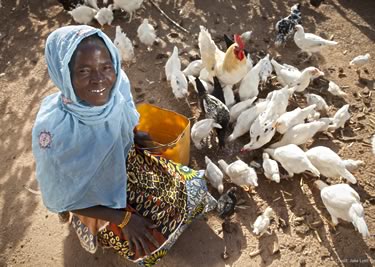
Achieving food security is one of the biggest challenges facing the development community today. Doing so entails increasing food production by an estimated 60% by 2050, adapting to an already changing climate, sustainably managing the natural resource base on which agricultural productivity relies, and reducing greenhouse gas emissions that would exacerbate climate change. Climate Smart Agriculture (CSA) aims to do just that: improve productivity, adapt and build resilience to climate change, and mitigate greenhouse gas release. The CSA working group, in operation since 2010, seeks to strengthen integration of environment and climate change considerations into the implementation of Feed the Future, the US government’s flagship food security initiative. Learn More
The CSA working group’s goal is to improve the effectiveness and sustainability of food security programs by promoting climate smart agriculture policies and practices. This interdisciplinary group first formed during the development of Feed the Future multi-year strategies and has become a critical hub for bringing together expertise across USAID and the USG on agriculture, environment and climate change. It consists of experts in soil science, food security, agronomy, ecology, water, biodiversity, climate science, and natural resource governance. Participation includes staff from multiple regional and pillar bureaus as well as interagency colleagues from the State Department, USDA and Peace Corps.
Specifically the roles of the CSA working group are to:
- Serve as a central hub for technical expertise and exchange on agriculture, environment and climate change
- Catalyze policy discussions on climate change and natural resources management in the context of agriculture and food security
- Provide support to USAID Missions implementing agriculture and food security programs
This website with additional information and resources is available so that Agency staff can contact the CSA working group for support and information. Mission staff working on agriculture and food security programs are particularly encouraged to engage the working group for technical assistance or to contribute from their experience. Washington staff with relevant experience and interest are encouraged to join the group. Working group meetings are held at USAID the third Tuesday of each month with additional meetings as necessary. You can reach out to Sarah Tully, PV Surandeshwar or Moffatt Ngugi for additional information.
Any questions concerning this notice may be directed to:
— Moffatt Ngugi [email protected]