

Social Development Training
Environmental Management in Development: The Evolution of Paradigms (long/World Bank version)
This is the longer, final WORLD BANK version (1990) of the Environmental Management Paradigms paper by Michael E. Colby (which was in turn a summary of his PhD dissertation at the Wharton School of the University of Pennsylvania). A Spanish…
Adaptive Management in the USAID CWT Portfolio: Current Practice and Opportunities
USAID’s combating wildlife trafficking portfolio offers an opportunity to understand how adaptive management is practiced across a discrete portfolio. To this end, USAID’s Biodiversity Division and Measuring Impact II (MI2) collaborated with the Global Learning for Adaptive Management (GLAM) partnership…
Keeping Better Company: Engaging the private sector to reduce forest sector-related corruption risk
Corruption poses a significant threat to forests and the communities that depend on them. By addressing corruption in forest products supply chains, companies can reduce reputational risk, ensure compliance with laws and regulations, avoid high penalties and felony charges, and…
Returning 33 Reptiles to Their Habitat
Papua contains incredibly high levels of biological diversity and is home to many endemic species. Unfortunately, their existence is under imminent threat from illegal wildlife trade. Cockatoos, pig-nosed turtles, and other exotic creatures of Papua are highly attractive to traders.…
Concept Note: Managing Deep Peatland In Singkil, Aceh: Achieving The Goals Of Greenhouse Gas Emission Reduction And Biodiversity Conservation
This report provides a brief yet informative analysis of the crucial role of peatlands in the ecosystems of Aceh Province, Indonesia. Peat forests contain some of the highest carbon stocks per hectare of any forest, and hence their protection must…
Champions of the Forest
USAID LESTARI partners with the Government of Indonesia to reduce greenhouse gas emissions and conserve biodiversity in carbon rich and biologically significant forest and mangrove ecosystems. This is achieved through improved land use governance, enhanced protected areas management and protection…
Social and Behavior Change Communication (SBCC): Demand Reduction Guidebook
This SBCC Guidebook is intended for use by individuals and organizations in planning, implementing, and evaluating SBCC activities and campaigns to reduce consumer demand for illegal wildlife products or to promote desired conservation behaviors.
Webinar Slides: Reducing Consumer Demand for Elephant Ivory and Tiger Parts and Products
In Thailand, spiritual beliefs underpin demand for some wildlife products, such as amulets made of ivory and tiger parts.
Trade-Based Money Laundering and Natural Resource Corruption
Trade-based money laundering is a form of money laundering commonly used to hide proceeds of environmental crime and related corruption. Natural resource crime is rarely committed in a vacuum – it is nearly always facilitated by corruption and combined with…
Accessing, harvesting and trading in wildlife: Corruption in the use of permits and allocation of access rights
Legal harvest or trade in wildlife, fisheries and forest products typically involves obtaining access rights and permits. Corruption in these processes undermines regulations that promote sustainability and legality and address disease risk. Strategies to address abuse of these processes include…
BRIDGE Final Report
The BRIDGE Final Report presents key programmatic highlights that resulted from five years of BRIDGE and USAID’s Office of Forestry and Biodiversity (FAB)’s biodiversity integration efforts. They reflect BRIDGE and FAB’s efforts to understand the evidence and integrated approaches that…
Demand Reduction and COVID-19 Response Webinar Presentation
This webinar featured updates on wildlife consumer demand reduction work in Asia and discussion about ways to coordinate a collective response to the root causes of this global pandemic threat.
Supplemental Guide 4: Technically Strong and Politically Savvy – Enhancing Thinking and Working Politically When Practicing the Conservation Standards at USAID
Thinking and Working Politically (TWP) is an approach to international development that brings greater attunement to the political dynamics of the local programming context in order to enhance development results. Given strong evidence that political factors overwhelmingly drive the loss…
The Importance of Wild Pollinators for Food Security and Nutrition
Wild pollinators like bees, birds, butterflies, and bats transfer pollen among flowers to enable crop fertilization and reproduction. While many important staple crops such as maize and rice are wind pollinated and/or can self-pollinate, over 75 percent of leading food…
Monitoring, Evaluation and Learning (MEL) for Biodiversity Integration
Measuring, evaluating and learning from integrated programs is critical to understanding the value of integrated versus vertical, or single-sector, programming. BRIDGE reviewed the past decade of USAID integrated biodiversity programming for examples of integrated MEL systems and processes. The result…
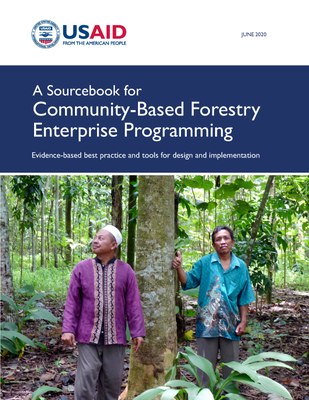
A Sourcebook for Community-Based Forestry Enterprise Programming
This Sourcebook aims to inform design and implementation of community forestry interventions that seek to deliver social, environmental, and economic outcomes in developing countries. Community forestry enterprises are potentially a key element in environmental management. Successfully implemented, they promote improved…
Lessons Learned from the USAID Biodiversity Integration Case Study Competition
Integration of biodiversity objectives and considerations with other development sectors has the potential to increase the sustainability of USAID programming, amplify results, and save costs. The collection of 17 cases from the 2019 USAID Biodiversity Integration Case Study Competition illustrates…
Corrupting trade: An overview of corruption issues in illicit wildlife trade
Corruption is a key facilitator of illegal wildlife trade. In addition to measures called for in international and regional resolutions and treaties, efforts to address corruption should focus on areas such as streamlining and auditing permitting processes and controls; engaging…
Discussion Note 2.0 – Thinking and Working Politically: Linkages and Lessons from Biodiversity Conservation
In 2018, USAID’s Center of Excellence on Democracy, Human Rights and Governance published a guide for practitioners on thinking and working politically through applied political economy analysis, and the following year the Office of Forestry and Biodiversity released a first…
Webinar Presentation: Peer-to-Peer Learning Exchange in the Africa Conservation Enterprises Portfolio
Peer-to-Peer Learning is an approach to sharing experience to facilitate a continuation of institutional knowledge and can be used to orient incoming staff to the history, context, challenges, and opportunities within the portfolio they are taking on. In this webinar,…