

Wildlands and Protected Areas Training
A Sourcebook for Community-Based Forestry Enterprise Programming
This Sourcebook aims to inform design and implementation of community forestry interventions that seek to deliver social, environmental, and economic outcomes in developing countries. Community forestry enterprises are potentially a key element in environmental management. Successfully implemented, they promote improved…
Discussion Note 2.0: Thinking and Working Politically: Linkages and Lessons from Biodiversity Conservation
In 2018, USAID’s Center of Excellence on Democracy, Human Rights and Governance published a guide for practitioners on thinking and working politically through applied political economy analysis, and the following year the Office of Forestry and Biodiversity released a first…
Best Practices for Stakeholder Engagement in Biodiversity Programming
Effectively engaging stakeholders is a core component of successful and sustainable biodiversity conservation programs. This guide compiles the evidence from a comprehensive literature review into a four-step process. It presents a systematic approach to engaging stakeholders in biodiversity conservation planning,…
Africa Biodiversity Collaborative Group Annual Report 2019
Together with our partner networks, ABCG continues to create innovative conservation solutions by developing new models for collaboration that help practitioners improve, scale, and replicate. By capturing and conveying conditions needed for successful biodiversity conservation, ABCG serves as a dynamic…
Gender-based violence and environment linkages: The violence of inequality
Rooted in discriminatory gender norms and laws and shrouded in impunity, gender-based violence (GBV) occurs in all societies as a means of control, subjugation and exploitation that further reinforces gender inequality. This publication establishes that these patterns of gender-based abuse…
Integrating Biodiversity and Sustainable Landscapes in USAID Programming
Integration of biodiversity and sustainable landscapes (SL) objectives and considerations has the potential to increase the sustainability of United States Agency for International Development (USAID) programming, amplify results, and save costs. Integrating biodiversity and SL offers an opportunity to jointly…
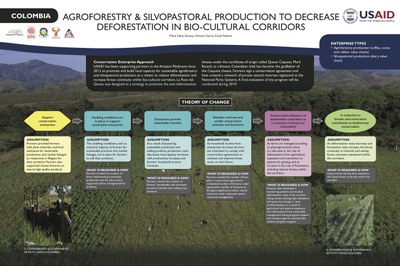
Global Learning and Experience Exchange: Conservation Enterprise Posters
At the July 2019 USAID Environment Officers’ Conference, USAID’s Conservation Enterprise Learning group hosted a Global Learning and Experience Exchange (GLEE). Representatives from 12 USAID-supported conservation enterprise activities presented case studies based on the Conservation Enterprise generalized theory of change.
ABCG Career Opportunities December 2019
Exciting conservation jobs in Africa!
Measuring Impact: Six Years of Improving Conservation at USAID
The Measuring Impact final report highlights six years of designing and implementing evidence-based conservation practices at USAID. Learn about the project’s key milestones, challenges and approaches, and development impacts at multiple levels.
Better Biodiversity Integration Through Geospatial Analysis
This guide describes the use of geospatial analysis for integrating biodiversity conservation with other development sectors at USAID. It consists of four chapters corresponding to the four stages of the program cycle and provides the why, when and how of…
ABCG Quarterly News Digest October 2019
A roundup of our latest news, conservation news highlights and upcoming events.
Conservation and Law Enforcement in Gorongosa and Niassa: A Study of the Criminal Justice Process for Wildlife Crime, from Apprehension to Incarceration
In July 2019, USAID/Mozambique released a comprehensive study of the wildlife criminal justice process in Mozambique and identified key areas for improvement. Successful enforcement of wildlife trafficking laws requires apprehending perpetrators and shepherding them through the criminal justice system. This…
Biodiversity Reference Sheet
Ecosystems provide goods and services critical to human development and well-being such as food, fiber, clean water, fertile soil and pollination. Opportunities for integrating biodiversity with other development sectors exist throughout the USAID portfolio, and can be realized by the…
Discussion Note: Thinking and Working Politically and Strengthening Political Economy Analysis in USAID Biodiversity Programming
This guidance note provides biodiversity sector specialists with an understanding of thinking and working politically and how political economy analysis can sharpen the tools already used for design and adaptive management in the biodiversity sector. It provides: 1) an introduction…
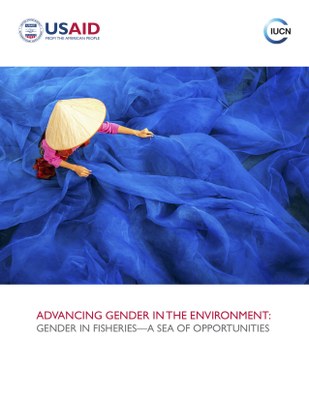
Advancing Gender in the Environment: Gender in Fisheries—A Sea of Opportunities
Produced by USAID’s Office of Gender Equality and Women’s Empowerment (GenDev), USAID’s Office of Forestry and Biodiversity (FAB), and the International Union for Conservation of Nature (IUCN), the guide provides an overview of the unique roles and contributions women make…
USAID Biodiversity Conservation and Forestry Programs, Fiscal Year 2017 Annual Report
USAID Biodiversity Conservation and Forestry Programs, Fiscal Year 2017 annual report.
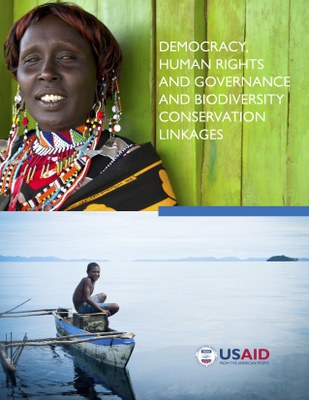
Democracy, Human Rights and Governance and Biodiversity Conservation Linkages
This document provides examples of how and where USAID has advanced democracy, rights, and governance (DRG) objectives—such as participation, inclusion, transparency, and accountability. USAID’s approaches include promoting co-management approaches; tackling environmental crime and wildlife trafficking; strengthening the legal and judicial…
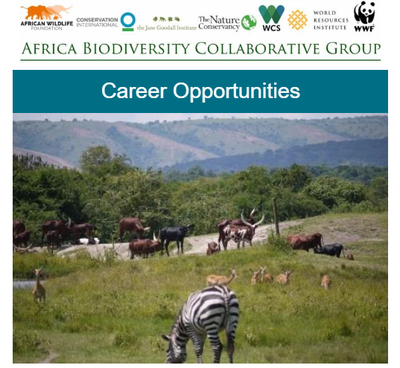
ABCG Career Opportunities February 2019
Working to Protect Nature is Rewarding: Check Out These New Job Opportunities.
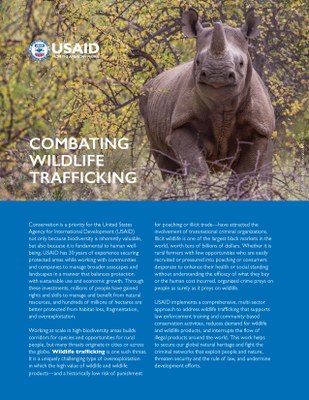
Combating Wildlife Trafficking Overview
Illicit wildlife is one of the largest black markets in the world, worth tens of billions of dollars. USAID implements a comprehensive, multi-sector approach to address wildlife trafficking that supports law enforcement training and community-based conservation activities, reduces demand for…
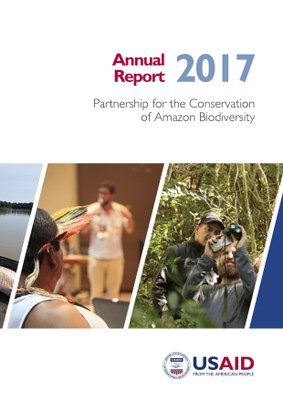
Partnership for the Conservation of Amazon Biodiversity Annual Report 2017
In 2017, PCAB activities covered an area of 56 million hectares, providing direct economic benefits to more than 4,000 people and indirectly benefiting thousands. In the coming years, we would like to expand this partner network even further and increase…