

Resilient Farming Systems USAID RMP Search
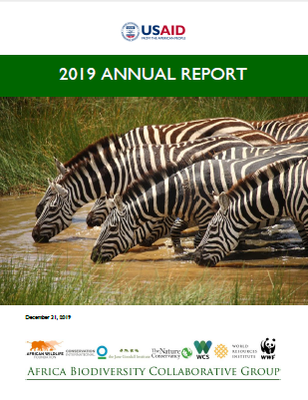
Africa Biodiversity Collaborative Group Annual Report 2019
Together with our partner networks, ABCG continues to create innovative conservation solutions by developing new models for collaboration that help practitioners improve, scale, and replicate. By capturing and conveying conditions needed for successful biodiversity conservation, ABCG serves as a dynamic…
USAID GLOBAL ENVIRONMENTAL MANAGEMENT SUPPORT (GEMS) SECTOR ENVIRONMENTAL GUIDELINE: ARTISANAL AND SMALL-SCALE MINING
This document presents one sector of the Sector Environmental Guidelines (SEGs) prepared for United States Agency for International Development (USAID) under the Agency’s Global Environmental Management Support (GEMS) program. All sectors are accessible at http://www.usaidgems.org/sectorGuidelines.htm. Purpose. The purpose of this…
ENVIRONMENTALLY SOUND DESIGN (ESD) SECTOR ENVIRONMENTAL GUIDELINES SMALL-SCALE DRYLAND AGRICULTURE
ENVIRONMENTALLY SOUND DESIGN (ESD) SECTOR ENVIRONMENTAL GUIDELINES: SMALL-SCALE DRYLAND AGRICULTURE This document presents one sector of the Sector Environmental Guidelines prepared for USAID under the Agency’s Global Environmental Management Support Project (GEMS). All sectors are accessible at www.usaidgems.org/bestPractice.htm. The purpose…
Making Gender Count: Leveraging M&E to Mainstream Gender
South Asia is one of the most water-scarce regions of the world. The Himalayan river basins that supply much of the region’s water, traverse national boundaries and are under increasing pressure due to industrialization, urbanization and a rapidly-growing population. Water…
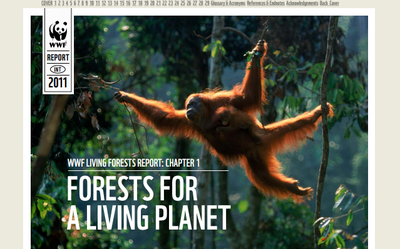
WWF’s Living Forest Report: Chapter 1
WWF’s Living Forests Report is part of an ongoing conversation with partners, policymakers, and business about how to protect, conserve, sustainably use, and govern the world’s forests in the 21st century.
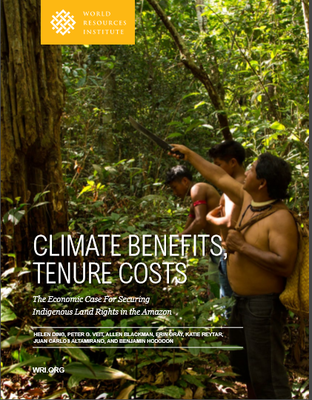
CLIMATE BENEFITS, TENURE COSTS
The Economic Case For Securing Indigenous Land Rights in the Amazon
Final Report: Forest Carbon, Markets and Communities (FCMC) Program
Tetra Tech was awarded the three-and-one-half year Forest Carbon, Markets, and Communities Program (FCMC) Task Order (TO) by the United States Agency for International Development (USAID) in late March 2011. No-cost extensions enabled the program to continue through August 2015.…
Supporting REDD+ in Developing Countries: A Review of Policy Options
The objective of this paper is to evaluate the potential of a range of market and non-market policy options available to developing countries willing to contribute to a global climate change solution by reducing emissions from deforestation and forest degradation,…
(MI) Measuring Impact: Lessons Learned from the Forest, Climate and Communities Alliance
MI is a five-year USAID project executed by the E3/FAB Office designed to improve the Agency’s practice of conservation by building USAID’s capacity to better design, manage, evaluate, and learn from biodiversity conservation initiatives. As such, MI was tasked with…
Voluntary Guidelines on the Responsible Governance of Tenure of Land, Fisheries and Forests in the Context of National Food Security
The purpose of these Voluntary Guidelines is to serve as a reference and to provide guidance to improve the governance of tenure of land, fisheries and forests with the overarching goal of achieving food security for all and to support…
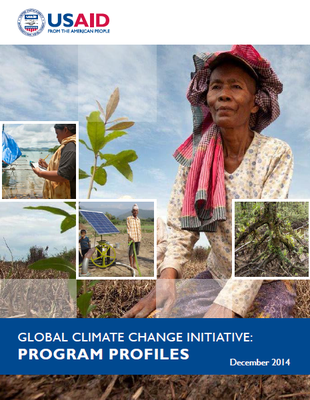
Global Climate Change Initiative: Program Profiles
This report features a cross-section, not a comprehensive catalogue, of USAID climate activities across many countries world wide.
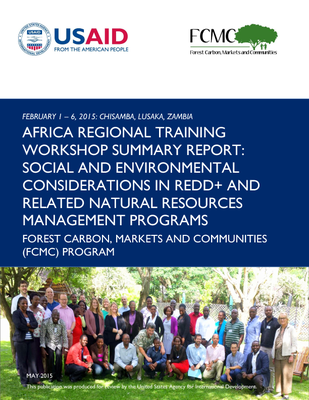
Africa Regional Training Workshop Summary Report: Social and Environmental Considerations in REDD+ and Related Natural Resources Management Programs
The Africa Regional Training Workshop on Social and Environmental Considerations in reducing emissions from deforestation and forest degradation and the role of conservation, sustainable management of forests and enhancements of forest carbon stocks (REDD+) Programming and Implementation was conducted from…
Toward Zero-Deforestation Oil Palm in Peru: Understanding Actors, Markets, and Barriers
Large, commercial agriculture and timber enterprises are the principal agents of tropical deforestation in a number of countries, with four key commodities of soy, beef, palm oil, and pulp and paper being key drivers of tropical deforestation globally. TFA 2020…
REDD+ Supply and Demand 2015-2025
Forest loss in developing countries represents a significant contribution to global emissions along with significant climate change mitigation potential. How Reducing Emissions from Deforestation and Forest Degradation in Developing Countries; and the Role of Conservation, Sustainable Management of Forests, and…
The ICT4D 2.0 Manifesto: Where Next for ICTs and International Development?
ICT4D – the application of information and communication technologies for international development – is moving to a new phase. This will require new technologies, new approaches to innovation and implementation, new intellectual perspectives and,
Community-Based Forest Management In Kalimantan, Indonesia: A Stocktaking of Lessons Learned
Capitalizing Knowledge Connecting Communities (CK2C) strives to build knowledge of successful natural resource management (NRM) initiatives by capturing lessons learned at the community level. The project identifies successful activities and analyzes the
USAID Biodiversity Report 2010
This report summarizes biodiversity conservation and forestry programs supported by the United States Agency for International Development (USAID) in ½scal year (FY) 2009. Biodiversity and forestry are reported together because they are highly interrelate
Biodiversity Conservation: A Guide for USAID Staff and Partners
Biodiversity conservation is an evolving, dynamic field, and this Guide serves as a starting point to shape and guide programs or activities that should ultimately be implemented based on local environmental and socioeconomic conditions and capacity of im
Miombo Ecoregion Vision Report
This report is based on work conducted for WWF-SARPO circa 2001. Apparently, it never received wide distribution and has only recently (2011) been revised and made available online. The report provides a detailed overview of the ecoregion — both biologic