

Sustainable Intensification + High Resilience USAID RMP Search
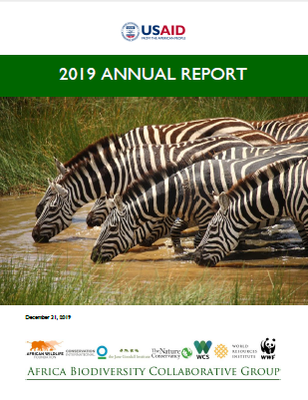
Africa Biodiversity Collaborative Group Annual Report 2019
Together with our partner networks, ABCG continues to create innovative conservation solutions by developing new models for collaboration that help practitioners improve, scale, and replicate. By capturing and conveying conditions needed for successful biodiversity conservation, ABCG serves as a dynamic…
ENVIRONMENTALLY SOUND DESIGN (ESD) SECTOR ENVIRONMENTAL GUIDELINES SMALL-SCALE DRYLAND AGRICULTURE
ENVIRONMENTALLY SOUND DESIGN (ESD) SECTOR ENVIRONMENTAL GUIDELINES: SMALL-SCALE DRYLAND AGRICULTURE This document presents one sector of the Sector Environmental Guidelines prepared for USAID under the Agency’s Global Environmental Management Support Project (GEMS). All sectors are accessible at www.usaidgems.org/bestPractice.htm. The purpose…
Making Gender Count: Leveraging M&E to Mainstream Gender
South Asia is one of the most water-scarce regions of the world. The Himalayan river basins that supply much of the region’s water, traverse national boundaries and are under increasing pressure due to industrialization, urbanization and a rapidly-growing population. Water…
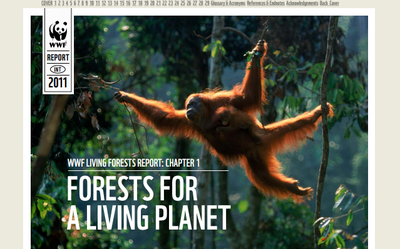
WWF’s Living Forest Report: Chapter 1
WWF’s Living Forests Report is part of an ongoing conversation with partners, policymakers, and business about how to protect, conserve, sustainably use, and govern the world’s forests in the 21st century.
Incentivizing a Transition to Zero-Deforestation Commodities: Recommendations for Colombia, the Democratic Republic of Congo, Liberia, and Peru
To incentivize zero-deforestation commodity production in tropical forest countries, it is important to ensure that the key factors influencing commodity value chain dynamics align with reducing deforestation. This paper provides recommendations to achieve zero-deforestation commodity production in Africa (the Democratic…
(MI) Measuring Impact: Lessons Learned from the Forest, Climate and Communities Alliance
MI is a five-year USAID project executed by the E3/FAB Office designed to improve the Agency’s practice of conservation by building USAID’s capacity to better design, manage, evaluate, and learn from biodiversity conservation initiatives. As such, MI was tasked with…
Voluntary Guidelines on the Responsible Governance of Tenure of Land, Fisheries and Forests in the Context of National Food Security
The purpose of these Voluntary Guidelines is to serve as a reference and to provide guidance to improve the governance of tenure of land, fisheries and forests with the overarching goal of achieving food security for all and to support…
Incentivizing No-Deforestation Palm Oil Production in Liberia and the Democratic Republic of Congo
The objective of this paper is to identify and develop options for actions that the U.S. Government could take to support a transition to the production and sourcing of zero-deforestation palm oil from countries in Africa that harbor large areas…
NATURE, WEALTH, & POWER 2.0 Launch/Release Event
Transcript from the NWP-2 Release Event, January 27, 2014. Speakers: NANCY SUTLEY – Chair, Council of Environmental Quality, White House; ASIF SHAIKH – Sr. Advisor, Center for Strategic and International Studies; ERIC POSTEL – Asst. Administrator, USAID/Bureau for Economics, Environment…
Biodiversity Conservation: A Guide for USAID Staff and Partners
Biodiversity conservation is an evolving, dynamic field, and this Guide serves as a starting point to shape and guide programs or activities that should ultimately be implemented based on local environmental and socioeconomic conditions and capacity of im
Land, Power, and IdentIty: Roots of Violent Conflict in Eastern DRC
This study examines access to, use of and management of land and its links with the root causes of conflict in the two Kivu provinces and Ituri in the Democratic Republic of Congo (DRC). The study’s aim is to identify…
Supporting Zero-Deforestation Cattle in Colombia
Colombia is among the world’s top cattle-producing countries, with more than 23 million head of beef and dairy cattle occupying approximately 38 percent of the total land area. It is challenging to clearly correlate deforestation with specific agricultural commodities in…
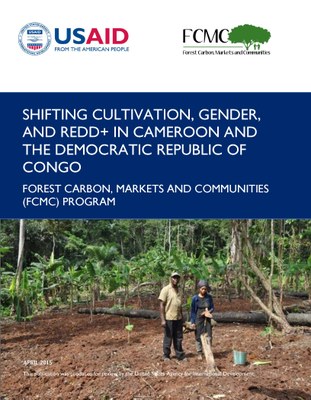
Shifting Cultivation, Gender, and REDD+ in Cameroon and the Democratic Republic of the Congo PDF
Shifting cultivation – also called swidden, slash-and-burn, or rotational cultivation – is the natural resource management system that underpins food production and livelihoods in the forest zones of Central African countries. It has been identified as a key driver of…
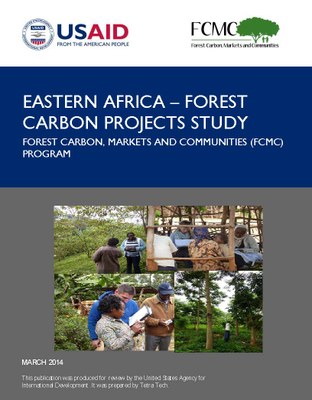
Eastern Africa – Forest Carbon Projects Study
This study analyzes four forest carbon projects in Eastern Africa and aims to better understand the challenges and successes of such projects that combine climate change, biodiversity conservation and community development objectives.
REDD+ and Biodiversity Conservation: Approaches Experiences and Opportunities for Improved Outcomes
This report reviews how biodiversity issues are currently being addressed in existing safeguard policies and frameworks, national programs and forest carbon project activities, and provides recommendations on how to ensure positive biodiversity impacts in emerging REDD+ initiatives. This synthesis report…
A Review of the Biodiversity Goals and Proposed Monitoring Methods in National REDD+ Programs
This study reviews documents developed early in the REDD+ readiness process to explore how emerging national-level REDD+ programs are addressing biodiversity issues.
USAID Biodiversity and Development Research Agenda
To help build the evidence base for biodiversity conservation and integrated programming, the Agency sets this research agenda to define and prioritize the most critical research needed in the area of biodiversity conservation in support of USAID’s conservation and development…
Working Paper – USAID-Senegal Nature, Wealth and Power Retrospective Study Contribution on Nature
This report was prepared by the World Resources Institute as a contribution to a larger retrospective study of USAID’s investments in environment and natural resource management programs over the past thirty years. The study provides a particular focus on lessons…
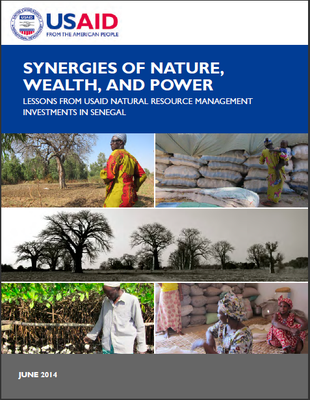
Synergies of Nature, Wealth, and Power: Lessons from USAID Natural Resource Management Investments in Senegal
This retrospective study “tells the story” of the historical context and evolution of USAID’s long-term commitment to sustainable development in Senegal through NRM program assistance. The study is designed to contribute to a greater appreciation of the achievements and impacts…
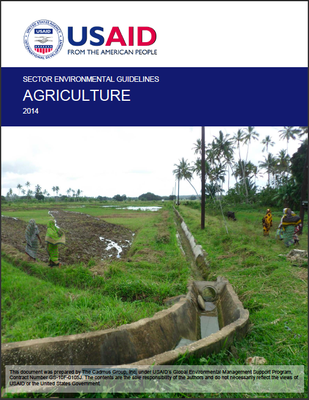
USAID Sector Environmental Guidelines: Agriculture 2014
This document presents one sector of the Sector Environmental Guidelines prepared for USAID under the Agency’s Global Environmental Management Support Project (GEMS). The purpose of this document and the Sector Environmental Guidelines overall is to support environmentally sound design and…