

Biodiversity and Climate Change Training
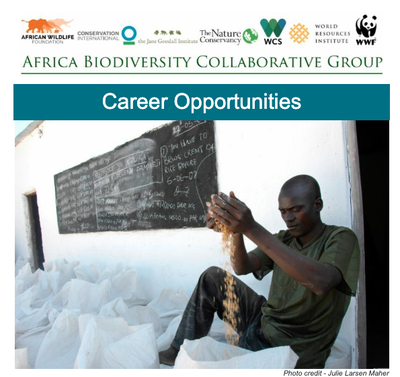
Africa Biodiversity Collaborative Group Career Opportunities May 2020
Want to give back to nature? Join leading conservation organization now hiring.
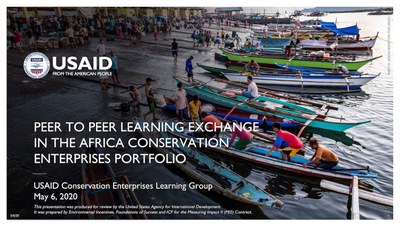
Webinar Presentation: Peer-to-Peer Learning Exchange in the Africa Conservation Enterprises Portfolio
Peer-to-Peer Learning is an approach to sharing experience to facilitate a continuation of institutional knowledge and can be used to orient incoming staff to the history, context, challenges, and opportunities within the portfolio they are taking on. In this webinar,…
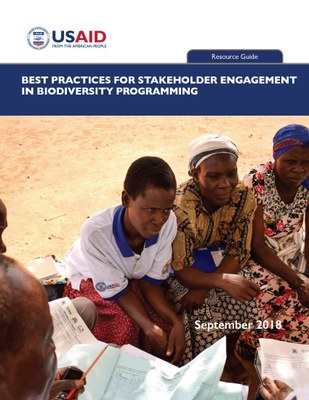
Best Practices for Stakeholder Engagement in Biodiversity Programming
Effectively engaging stakeholders is a core component of successful and sustainable biodiversity conservation programs. This guide compiles the evidence from a comprehensive literature review into a four-step process. It presents a systematic approach to engaging stakeholders in biodiversity conservation planning,…
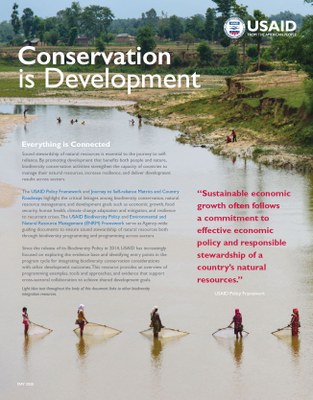
Conservation is Development
This resource provides an overview of programming examples, tools and approaches, and evidence that support cross-sectoral collaboration to achieve shared development goals. It was developed by the Biodiversity Results and Integrated Development Gains Enhanced (BRIDGE) project, a five-year contract (2015-2020)…
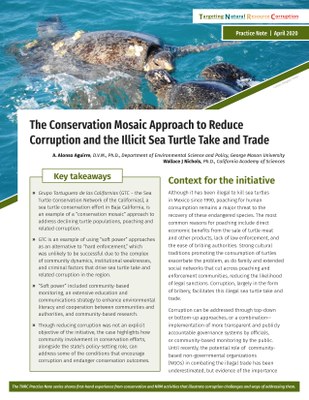
The Conservation Mosaic Approach to Reduce Corruption and the Illicit Sea Turtle Take and Trade
Although it has been illegal to kill sea turtles in Mexico since 1990, poaching for human consumption remains a major threat to the recovery of these endangered species. The most common reasons for poaching include direct economic benefits from the…
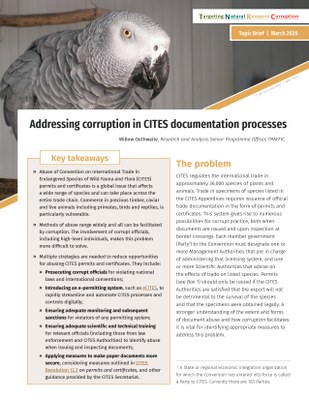
Addressing corruption in CITES documentation processes
Abuse of Convention on International Trade in Endangered Species of Wild Fauna and Flora (CITES) permits and certificates is a global issue that affects a wide range of species and can take place across the entire trade chain. Commerce in…
Office of Forestry and Biodiversity: Assessment of Biodiversity Integration Efforts
The Office of Forestry and Biodiversity (FAB) engaged Measuring Impact II to assess efforts to implement the USAID Biodiversity Policy’s goal to “integrate biodiversity as an essential component of human development.” The assessment investigated three modalities by which FAB, other…
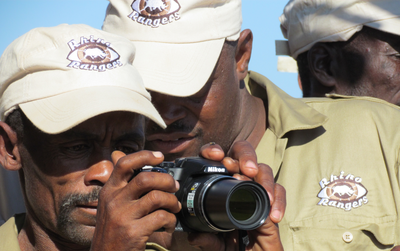
People Not Poaching
People Not Poaching is a joint initiative by IUCN, IIED, and TRAFFIC to compile case studies on community engagement to combat wildlife trafficking.
Advancing Reforms to Promote Sustainable Management of Ghana’s Small Pelagic Fisheries
Ghana is facing a crisis of sustainability in its small pelagic fisheries that threatens the food security and livelihoods of a large segment of the population. While the technical solutions to the problems in these fisheries have been known for…
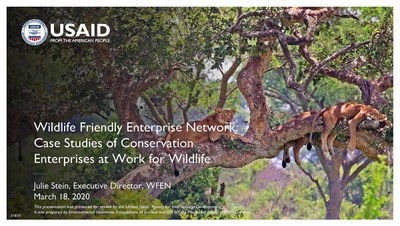
Wildlife Friendly Enterprise Network Webinar Presentation
On March 18, E3/FAB and Measuring Impact II hosted the first joint webinar of the Conservation Enterprise and Combating Wildlife Trafficking Learning Groups with Julie Stein, the Executive Director and Co-Founder of the Wildlife Friendly Enterprise Network. Ms. Stein works…
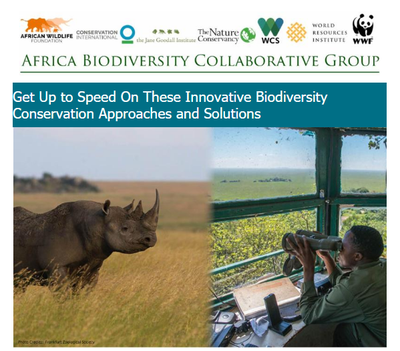
Get Up to Speed On These Innovative Biodiversity Conservation Approaches and Solutions
One of ABCG’s key goal is to encourage the exchange of information and knowledge among stakeholders while providing an opportunity for technical experts to connect and engage. In 2019, we co-hosted 11 brown bag presentations and events on diverse and…
Africa Biodiversity Collaborative Group Annual Report 2019
Together with our partner networks, ABCG continues to create innovative conservation solutions by developing new models for collaboration that help practitioners improve, scale, and replicate. By capturing and conveying conditions needed for successful biodiversity conservation, ABCG serves as a dynamic…
Forest Trends Newsletter February, 2010
Hacking Infrastructure Planning; Corporate “Tells” on Forest Finance
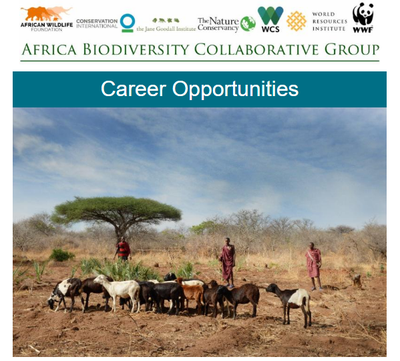
ABCG Career Opportunities February, 2020
Exciting Career Opportunities in Nature Conservation
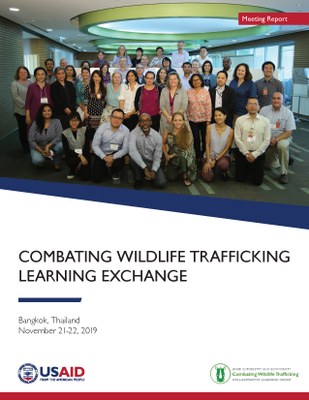
Combating Wildlife Trafficking Learning Exchange: Meeting Report
In November 2019, USAID hosted a regional CWT learning exchange in Bangkok, Thailand. The exchange provided opportunities for sharing and discussing CWT activities while focusing on two of the USAID CWT Learning Agenda’s strategic approaches: 1) improving the practice of…
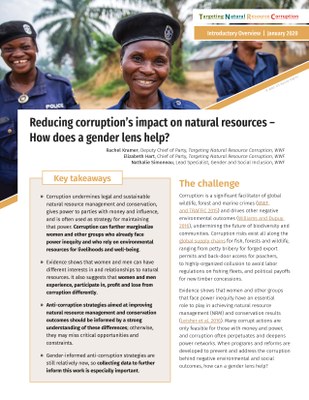
Reducing corruption’s impact on natural resources: How does a gender lens help?
Evidence shows that women and other groups that face power inequity have an essential role to play in achieving natural resource management and conservation results. Many corrupt actions are only feasible for those with money and power, and corruption often…
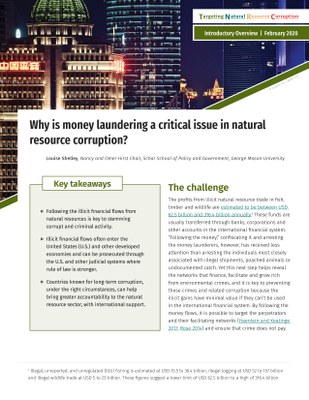
Why is money laundering a critical issue in natural resource corruption?
The profits from illicit natural resource trade in fish, timber and wildlife are estimated to be between $62.5 billion and $316.4 billion annually. These funds are usually transferred through banks, corporations and other accounts in the international financial system. “Following…
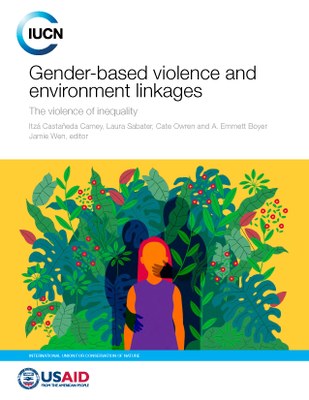
Gender-based violence and environment linkages: The violence of inequality
Rooted in discriminatory gender norms and laws and shrouded in impunity, gender-based violence (GBV) occurs in all societies as a means of control, subjugation and exploitation that further reinforces gender inequality. This publication establishes that these patterns of gender-based abuse…
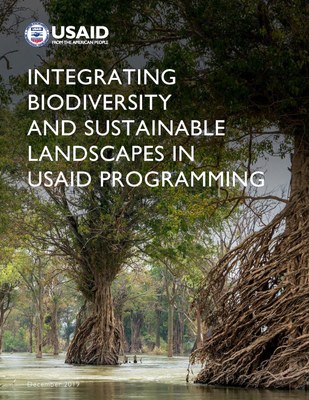
Integrating Biodiversity and Sustainable Landscapes in USAID Programming
Integration of biodiversity and sustainable landscapes (SL) objectives and considerations has the potential to increase the sustainability of United States Agency for International Development (USAID) programming, amplify results, and save costs. Integrating biodiversity and SL offers an opportunity to jointly…
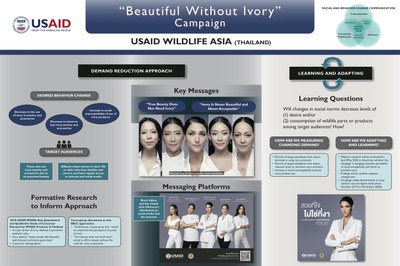
Combating Wildlife Trafficking Learning Exchange: Demand Reduction Posters
In November 2019, USAID hosted a regional CWT learning exchange in Bangkok, Thailand. The exchange featured poster presentations on demand reduction campaigns from USAID Wildlife Asia, USAID BIJAK, USAID Protect Wildlife, and USAID Saving Species. The presentations focused on the…