

Conflict Management Training
Advancing Gender in the Environment: Gender in Fisheries—A Sea of Opportunities
Produced by USAID’s Office of Gender Equality and Women’s Empowerment (GenDev), USAID’s Office of Forestry and Biodiversity (FAB), and the International Union for Conservation of Nature (IUCN), the guide provides an overview of the unique roles and contributions women make…
Report: The Nature of Conservation Enterprises: A 20-year retrospective evaluation of the theory of change behind this widely used approach to biodiversity conservation
USAID’s “The Nature of Conservation Enterprises: A 20-year retrospective evaluation of the theory of change behind this widely used approach to biodiversity conservation” uses a theory of change to examine the assumptions and draw lesson learned on the conditions needed…
ENVIRONMENTALLY SOUND DESIGN (ESD) SECTOR ENVIRONMENTAL GUIDELINES SMALL-SCALE DRYLAND AGRICULTURE
ENVIRONMENTALLY SOUND DESIGN (ESD) SECTOR ENVIRONMENTAL GUIDELINES: SMALL-SCALE DRYLAND AGRICULTURE This document presents one sector of the Sector Environmental Guidelines prepared for USAID under the Agency’s Global Environmental Management Support Project (GEMS). All sectors are accessible at www.usaidgems.org/bestPractice.htm. The purpose…
Final Evaluation of the Sustainable Conservation Approaches in Priority Ecosystems Program (SCAPES)
This final evaluation of the Sustainable Conservation Approaches in Priority Ecosystems (SCAPES) program assesses conservation strategies used by four implementing partners to address priority threats and strengthen local capacity to conserve biodiversity.
Indigenous land tenure insecurity fosters illegal logging in Nicaragua
The authors conducted household survey and interviews with forestry sector officials to understand how tenure insecurity in Nicaragua affected forests and indigenous peoples, discovering the importance of looking closely at so-called legal, illegal, and corrupt practices to understand their legitimacy.
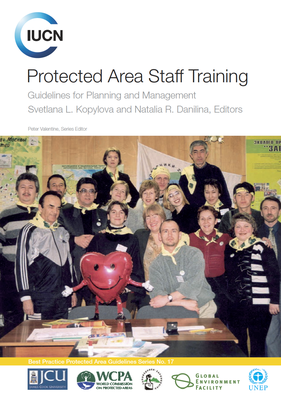
Protected Area Staff Training: Guidelines for Planning and Management
This guide from the IUCN is designed to help protected area managers to develop, implement, and evaluate targeted training programs to build and maintain staff competencies.
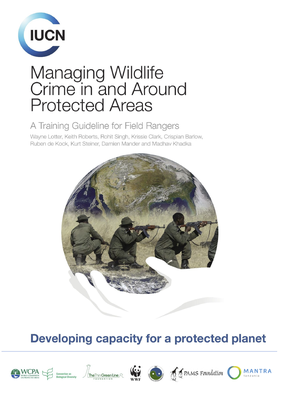
Managing Wildlife Crime in And Around Protected Areas: A Training Guideline for Field Rangers
A training guideline produced by IUCN that provides a benchmark of best practices for field ranger trainers, which “covers the basics of operations and the tactics required for them to successfully carry out anti-poaching and operations in the field.
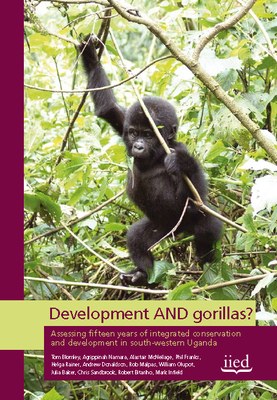
Development AND Gorillas? Assessing Fifteen Years of Integrated Conservation and Development in South-Western Uganda
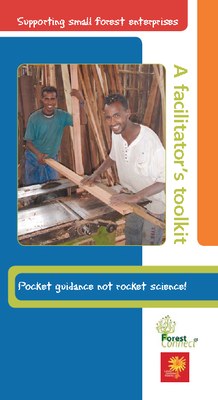
Supporting Small Forest Enterprises: A Facilitator’s Toolkit; Pocket Guidance Not Rocket Science!
Community Action to Conserve Biodiversity: Linking Biodiversity Conservation with Poverty Reduction
A Global Assessment of Community Based Natural Resources Management: Addressing the Critical Challenges of the Rural Sector
CBNRM: An assessment with recommendations for the future. Rural development issues are critical not only for the rural areas themselves but also for addressing pressing global concerns of food security (FS), climate change, biodiversity conservation, poverty reduction, provision of environmental…
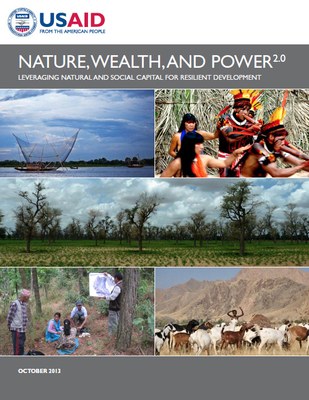
Nature, Wealth, Power 2.0: Leveraging Natural and Social Capital for Resilient Development
This volume is a sequel to the original Nature, Wealth, & Power framework paper (NWP1), produced in 2002. That document, although focused on rural Africa, was found useful by a variety of development practitioners around the world, and elicited significant…
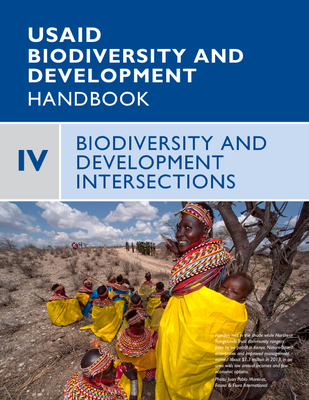
USAID Biodiversity and Development Handbook – Chapter 4.8: Democracy, Rights and Governance
Chapter 4.8 of USAID’s Biodiversity and Development Handbook is focused on the intersection of biodiversity and conservation with democracy, rights and governance. Section 4.8.1 focuses on governance while Section 4.8.2 focuses on conflict and peace building. Many practitioners are increasingly…
USAID Biodiversity and Development Handbook – Chapter 4: Biodiversity and Development Intersections
The USAID Biodiversity and Development Handbook contains sections in Chapter Four that are a primer on integration of biodiversity into key development sectors. Like the other Chapters, these sections are built around USAID experience but also draw on many other sources.
USAID Biodiversity and Development Handbook – Chapter 5: Annexes
The 2015 USAID Biodiversity and Development Handbook is a foundational resource for implementation of USAID’s Biodiversity Policy. The main purpose of the handbook is to help USAID managers and implementing partners plan, design, implement, and monitor strong and sustainable conservation…
USAID Water and Development Strategy 2013-2018
USAID’s first global Water and Development Strategy is intended to provide a clear overview of the Agency’s approach to water programming. The strategy emphasizes how sustainable water use is critical to save lives, to promote sustainable development and to achieve…
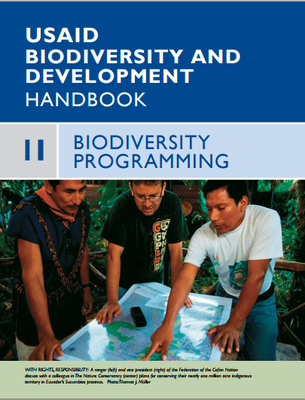
USAID Biodiversity and Development Handbook – Chapter 2: Biodiversity Programming
The 2015 USAID Biodiversity and Development Handbook is a foundational resource for implementation of USAID’s Biodiversity Policy. The main purpose of the handbook is to help USAID managers and implementing partners plan, design, implement, and monitor strong and sustainable conservation…
Biodiversity and Development Handbook
The 2015 USAID Biodiversity and Development Handbook is a foundational resource for implementation of USAID’s Biodiversity Policy. The main purpose of the handbook is to help USAID managers and implementing partners plan, design, implement, and monitor strong and sustainable conservation…
Expert Workshop on Land Tenure for Drylands Development (Summary)
Summary of the Expert Workshop on Land Tenure for Drylands Development held in Nairobi, Kenya 28 February to 2 March 2005.